Where the Ganges Meets the Gospel: Patna's Ancient Christian Heritage and Its Lessons for American Spiritual Seekers
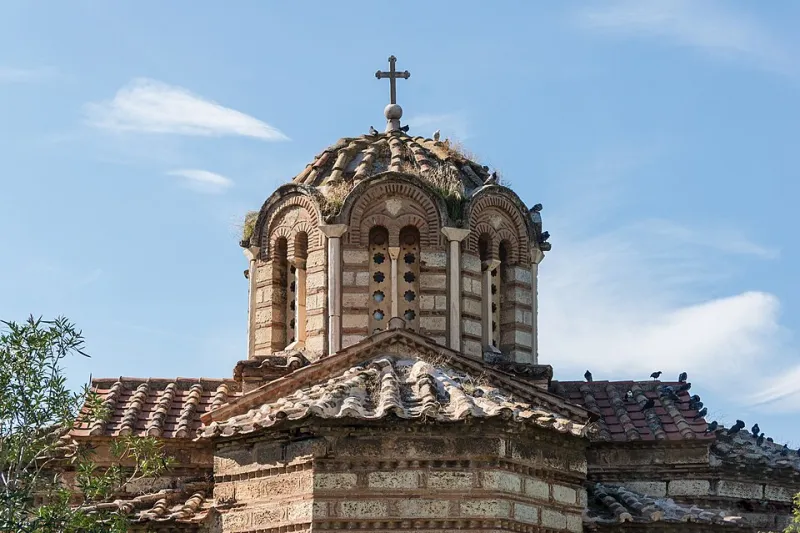
Photo: Jebulon, CC0, via Wikimedia Commons
A Faith Older Than You Might Expect
Most Americans, when they picture Christianity, envision European cathedrals, Southern Baptist congregations, or the megachurches dotting suburban landscapes from Atlanta to Phoenix. Few would naturally turn their gaze toward Patna, the ancient capital of Bihar in northeastern India — yet this city carries one of the most quietly remarkable Christian histories on the Asian continent.
Traditionally, scholars trace Christianity's arrival in India to the apostle Thomas himself, who is believed to have landed on the southwestern Malabar Coast around 52 AD. But the faith's journey northward, toward the Gangetic plains where Patna sits, unfolded through centuries of missionary endeavors, colonial encounters, and — crucially — genuine grassroots spiritual exchange. By the time Jesuit missionaries established a formal presence in the region during the sixteenth and seventeenth centuries, they were entering a civilization already steeped in profound theological inquiry through Buddhism, Hinduism, and Jainism. The result was not a simple overwriting of one tradition by another. It was something far more nuanced: a slow, living conversation.
For American spiritual seekers who feel constrained by the boundaries of a single tradition, this history offers an unexpectedly rich resource.
The Philosophical Common Ground
One of the most striking features of Patna's Christian communities — including those connected to institutions like Jesus & Mary — is their ease with theological complexity. Where many Western congregations treat doctrinal clarity as a virtue in itself, the faith communities here have long operated within a culture that holds multiple philosophical frameworks simultaneously.
Consider the concept of seva, the Sanskrit term for selfless service. In Hindu and Buddhist traditions, seva is understood as a spiritual discipline — an act that purifies the practitioner as much as it benefits the recipient. Christian communities in Patna have embraced this framework wholeheartedly, layering it alongside the Gospel's own call to servant leadership. The result is a theology of service that feels simultaneously indigenous and orthodox, rooted in both the Sermon on the Mount and the Bhagavad Gita's teachings on action without attachment.
For American Christians wrestling with the tension between faith and social action — a debate that has divided congregations for decades — this integrated approach offers a refreshingly practical resolution. Service is not merely a byproduct of belief; it is itself a form of worship.
Similarly, the Indian philosophical concept of anatta, or non-self, finds unexpected resonance with Christian mystical traditions surrounding ego dissolution and surrender to God. Leaders within Patna's interfaith dialogue circles have noted that American visitors — particularly those arriving from contemplative or Quaker backgrounds — often experience a profound sense of recognition when these parallel threads are drawn together.
Voices from the Community
The interfaith work happening in and around Patna is not confined to academic theology. It is embodied in the daily rhythms of community life.
Local faith leaders describe a practice they call satsang gatherings — a term borrowed from Hindu devotional tradition meaning "gathering in truth" — where Christians, Hindus, and members of other traditions sit together for shared scripture reading, silent meditation, and open dialogue. These are not ecumenical exercises designed for interfaith diplomacy. They are genuine encounters, shaped by the conviction that truth, wherever it is found, belongs to God.
American spiritual seekers who have participated in similar gatherings — often through organizations like the World Community for Christian Meditation or contemplative retreat centers in New Mexico and California — will find the structure familiar. What distinguishes the Patna model is its embeddedness in an actual living neighborhood, rather than a retreat context. These conversations happen between people who share a street, a market, and a school system. They are not extraordinary events; they are the texture of ordinary life.
This distinction matters enormously. Much of what passes for interfaith dialogue in the United States occurs in carefully curated, often academic settings. Patna's model suggests that the most transformative spiritual exchange happens not in conference rooms, but in communities.
What American Seekers Can Take Home
The growing appetite among Americans for spirituality that transcends denominational or even religious boundaries is well documented. Surveys consistently show that a significant and rising portion of the US population identifies as "spiritual but not religious," while many practicing Christians actively supplement their faith with meditation practices, yoga, or philosophical traditions drawn from Eastern sources.
Patna's ancient Christian communities offer several specific gifts to this conversation.
First, they model a form of theological confidence that does not require exclusivity. These communities hold their Christian identity firmly while remaining genuinely curious about, and respectful of, other traditions. This is distinct from relativism; it is, rather, a deep faith secure enough to engage rather than retreat.
Second, they demonstrate that contemplative practice is not an import from Eastern traditions but a recovery of Christianity's own mystical heritage. The Desert Fathers, Meister Eckhart, and Thomas Merton all drew from wells that bear a striking resemblance to what Indian spiritual teachers have long offered. Patna's communities make this connection visible and accessible.
Third, they remind us that Christianity is not, and has never been, a purely Western religion. Its origins are Middle Eastern. Its early growth was as vigorous in Africa and Asia as in Europe. Reconnecting with that global history can be profoundly liberating for American believers who have felt constrained by the cultural assumptions embedded in their own tradition.
An Invitation to Look East
At Jesus & Mary Patna, the work of building bridges between East and West is not a theological project — it is a pastoral one. It is grounded in the conviction that every person who walks through the doors of a faith community, whether in Bihar or in Boston, is searching for the same essential things: meaning, belonging, and the quiet assurance that they are not alone.
The ancient Christian communities of Patna have been answering that call for centuries. For American spiritual seekers willing to look beyond their own horizon, the conversation they have been quietly sustaining offers something genuinely rare: a Christianity that feels both ancient and alive, both rooted and radically open.
The Ganges has been flowing past this city for millennia. The Gospel has been proclaimed here for centuries. And the dialogue between them — patient, honest, and ongoing — may be one of the most important spiritual conversations our era has yet to fully discover.