Faithful in the Furnace: What Patna's Christians Know About Suffering That the Prosperity Gospel Cannot Explain

There is a particular kind of theological embarrassment that arrives when suffering refuses to cooperate with the sermon. In thousands of American megachurches each Sunday, the implicit—and sometimes explicit—promise is that genuine faith produces tangible reward: restored health, financial breakthrough, relational healing delivered on a predictable divine schedule. It is a tidy arrangement. It is also, according to the lived experience of Patna's Christian communities, profoundly untrue.
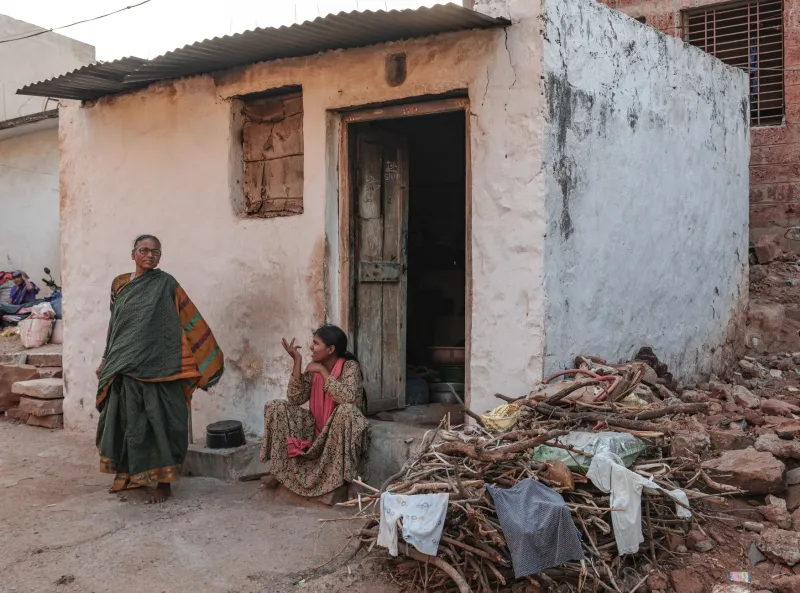
Patna, the ancient capital of Bihar, is not a city that easily accommodates theological tidiness. It is a place where Christians have worshipped, served, and buried their dead for generations while navigating one of India's most economically challenged regions. Poverty here is not an abstraction discussed in a stewardship sermon; it is the daily context of ordinary discipleship. And it is precisely within that context that a different—and arguably more honest—theology of suffering has taken root.
The Prosperity Gospel's Blind Spot
To understand what Patna offers, one must first reckon honestly with what the prosperity gospel obscures. The movement, which has spread far beyond its American origins into global Pentecostal and charismatic streams, rests on a transactional reading of Scripture: faithful giving and earnest prayer generate divine favor, measurable in material outcomes. Suffering, by this logic, signals either insufficient faith or unconfessed sin. The sick person did not believe hard enough. The family in poverty has not yet unlocked the right spiritual key.
The pastoral consequences of this framework are severe. Those who suffer are quietly shamed. Those who grieve are urged to "claim their healing" rather than sit in lament. The Book of Job is effectively rewritten so that Job's friends—the ones God explicitly rebukes—become the heroes of the story.
Patna's Christian tradition, shaped by generations of Jesuit and other Catholic missionary presence alongside Protestant communities, has never had the luxury of this narrative. When illness, displacement, and material scarcity are constants rather than exceptions, a theology that cannot hold suffering with integrity is not merely unhelpful—it is a pastoral catastrophe waiting to happen.
Suffering as Shared Ground, Not Private Shame
What strikes outside observers about Patna's faith communities is the absence of the shame spiral that the prosperity gospel so reliably generates. When a family loses a child to illness, the community does not quietly wonder what sin precipitated the loss. When a laborer's income collapses during monsoon flooding, no one suggests he fast more earnestly to reverse his fortunes. Instead, the community gathers—physically, practically, prayerfully—around the one who suffers.
This is not stoicism, and it is emphatically not resignation. It is something closer to what the Christian tradition has always called the paschal mystery: the conviction that the pattern of Christ's own life—suffering, death, and resurrection—is not merely a historical sequence but the very shape of redeemed human experience. To suffer is not to be abandoned by God. It is, in a way that resists easy sentimentality, to be drawn into the most intimate territory of the gospel.
Fathers at Jesus and Mary Parish speak of this not as an abstract theological position but as something learned through experience. A catechist who lost two children to illness in successive years does not describe her faith as something that protected her from grief. She describes it as something that accompanied her through grief—and as something that emerged from that passage both tested and deepened. Her testimony does not fit neatly onto a motivational banner. It does, however, fit the actual contours of the New Testament.
What American Christianity Might Unlearn
For American readers, the challenge this poses is not merely intellectual. It requires a kind of unlearning—the slow dismantling of assumptions about what God owes the faithful and what faithfulness is supposed to produce.
The prosperity gospel is not simply a fringe phenomenon in the United States. Its assumptions have seeped into mainstream evangelical and even mainline Protestant culture in subtler forms: the expectation that a good Christian life should be a relatively comfortable one, that earnest prayer produces measurable outcomes, that suffering is a problem to be solved rather than a passage to be accompanied. Even Christians who would explicitly reject the prosperity gospel often carry its emotional logic in their bones.
Patna's communities do not offer a romanticized alternative. No one in Bihar's Christian neighborhoods is celebrating poverty or suggesting that material suffering is spiritually superior to material stability. The point is not that hardship is good. The point is that hardship is real—and that a faith incapable of meeting it honestly is a faith built, as the Gospel of Matthew puts it, on sand.
The Liturgical Architecture of Endurance
One of the less-discussed dimensions of how Patna's Christians sustain resilience in suffering is the role of liturgical practice. The rhythms of the Church calendar—Advent's patient waiting, Lent's honest reckoning with mortality, the long ordinary time that follows Easter—provide a kind of temporal scaffolding for the experience of difficulty. Suffering is not an interruption to the Christian life. It is woven into its annual structure.
This stands in quiet contrast to the entertainment-oriented worship architecture of many American megachurches, where the dominant emotional register is celebratory and the service is carefully engineered to minimize discomfort. There is nothing inherently wrong with celebration. But a liturgical diet that never passes through lament or penitence produces Christians who are, spiritually speaking, unequipped for loss.
The Stations of the Cross, prayed communally on Friday evenings throughout Lent in Patna's parishes, are not a morbid exercise. They are a rehearsal—a slow, embodied walk through the geography of suffering with the one who has already traversed it. For communities that know suffering not as a theological concept but as a weekly reality, this practice is not optional piety. It is survival equipment.
A More Mature Invitation
What Patna's faith communities ultimately extend to American Christians is not an indictment but an invitation—to a more mature, more honest, and ultimately more liberating spirituality. One that does not promise immunity from pain but offers genuine companionship within it. One that reads the Beatitudes as a description of reality rather than a puzzle to be explained away. One that finds in the cross not a problem to be superseded by resurrection, but the very means by which resurrection becomes possible.
The prosperity gospel sells a version of Christianity that is, in the end, a form of spiritual insurance: pay your premiums of faith and giving, and God will protect your portfolio. Patna's Christians, shaped by a very different set of circumstances, have discovered that the actual gospel offers something less comfortable and infinitely more sustaining—the promise not of a life without furnaces, but of a companion who has already passed through the fire.