Decades of the Same Names: The Quiet Power of a Sunday School Roster That Barely Changes
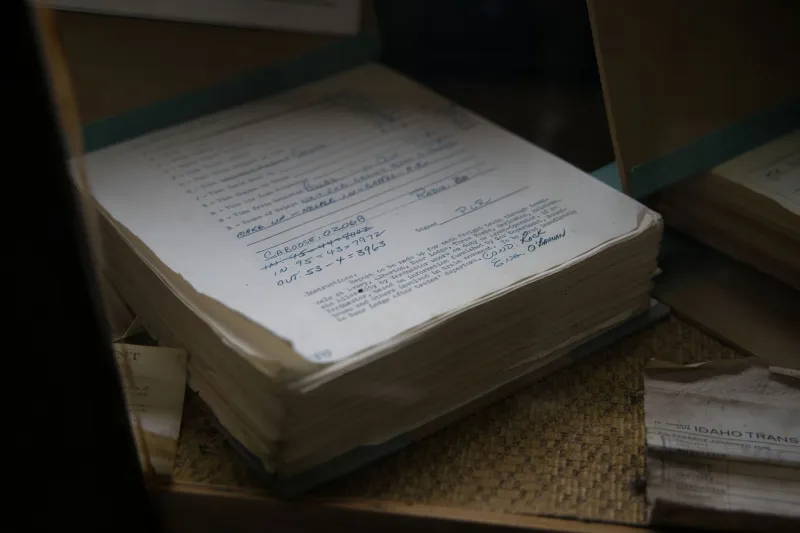
Tucked into the records office of a small parish near the Gandhi Maidan, there is a shelf of attendance registers that no one considers remarkable. The ledgers go back decades. Page through them and you will notice something unusual by American standards: the same family names, repeated year after year. A grandmother's name appears in a register from 1974. Her daughter's name appears in 1998. Her granddaughter's name appears in 2021. The teachers change occasionally. The curriculum barely changes at all. The children come, week after week, because their families came, week after week, before them.
For American parents exhausted by the churn of contemporary children's ministry, this unremarkable document may be the most counterintuitive parenting resource available.
The American Model: Perpetual Restart
Consider the typical trajectory of a child's church experience in the United States. A family finds a congregation they like. The children's pastor—often a position with high turnover—launches a new curriculum series. Within eighteen months, that pastor moves on, and the replacement brings a different program. The family, meanwhile, may itself be shopping: the worship style at the church across town feels fresher, the youth group at another congregation has better attendance incentives. By the time an American child turns thirteen, she may have cycled through three or four church environments, each one resetting the relational clock to zero.
Research on religious retention has noted for years what parents intuitively feel: continuity of relationships, not quality of programming, is the strongest predictor of whether a child retains faith into adulthood. Children need to be known by the same adults over long stretches of time. They need to watch the same faces age alongside their own.
The Patna registers document precisely this. Not a program. A presence.
What the Roster Actually Records
It would be romantic to suggest the parish never faced disruption. Families have migrated for work, as families in Bihar have done for generations. Teachers have fallen ill. Years have been interrupted. But the underlying pattern holds: when a family left, it was usually the neighborhood that changed, not the commitment. And when families returned—as many did—they returned to a community that still remembered them. The register did not need a re-onboarding process. It simply continued.
One teacher, now in her sixties, described her method without any awareness that it might sound radical to American ears: "I taught the mother. Now I teach the daughter. I do not change the lesson much. The lesson was never the point."
Practical Wisdom for the Exhausted American Parent
What can a parent in, say, suburban Dallas or the Minneapolis suburbs actually take from this? A few concrete commitments:
Choose a congregation you can imagine staying in for twenty years, not two. The question is not "Is this church the best fit right now?" but "Can we be known here long enough for our children to be watched growing up by the same people?"
Resist the curriculum carousel. If your church changes programs every season, your children are learning that faith is a product that gets updated. Ask instead whether the same volunteers are present. Volunteer continuity matters more than content quality.
Commit your own continuity. Children notice when parents drift. A family that attends through the dull seasons—through the pastor nobody likes, the building campaign, the year the youth group shrinks—teaches something no curriculum can: that belonging is not contingent on satisfaction.
Let your children be bored in the same room as the same adults. Boredom inside a stable community is formation. Novelty inside a revolving door is entertainment.
The Unfashionable Conclusion
American evangelical culture is built around the assumption that faith spreads through excellence—better speakers, better media, better experiences. The Patna roster suggests a humbler mechanism: faith spreads through proximity held constant over time. The register does not record what was taught. It records who was there.
For parents wondering why their children drifted, the honest question may not be "What content did we give them?" but "Who knew them, and for how long?" The answer to that question is written, year after unremarkable year, in ledgers like the ones gathering dust in Patna—documents that look like nothing and contain everything.