Still Waters, Slower Hours: What Bihar's Monastic Traditions Can Teach Burned-Out Americans
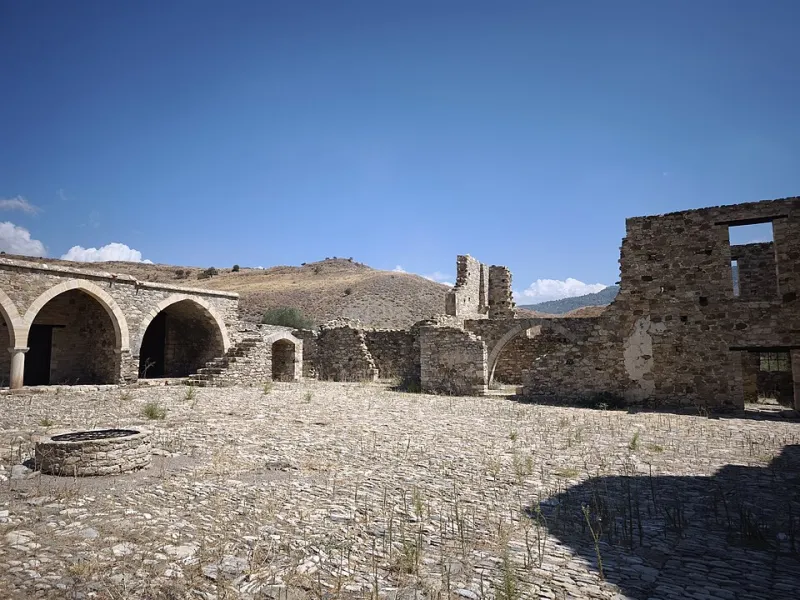
Photo: Viaggiamocela, CC BY-SA 4.0, via Wikimedia Commons
In the summer of 2023, the American Psychological Association reported that nearly 77 percent of American adults had experienced physical symptoms caused by stress in the prior month. Scroll through any major news feed on any given morning, and the diagnosis is almost self-evident: a culture running at a speed it was never designed to sustain. Yet on the banks of the Ganges, in the heart of Bihar, India, a very different rhythm has persisted for centuries — one that may hold unexpected answers for the weary American professional, the overscheduled parent, and the spiritually adrift young adult.
Patna's monastic heritage is layered and ancient. Christian convents established by Carmelite and Jesuit missionaries in the seventeenth and eighteenth centuries stand alongside Buddhist viharas whose origins predate the Common Era. These are not museum pieces. They are living communities, still organized around intentional practice, communal accountability, and an architectural philosophy that treats space itself as a spiritual instrument. What they share — across faith traditions — is a resolute refusal to be hurried.
The Architecture of Attention
Walk through the gates of a traditional monastery in the Patna region and you will notice something almost immediately: the noise of the city does not follow you inside. This is rarely accidental. Monastic builders across Bihar's history understood that the physical environment shapes the interior life. High compound walls, open interior courtyards, shaded colonnades, and the strategic placement of water features — wells, fountains, reflecting pools — were all deliberate choices designed to slow the nervous system before the mind had even registered the transition.
American homes and workplaces, by contrast, are largely engineered for efficiency and connectivity. Open-plan offices maximize collaboration but minimize the quiet necessary for deep thought. Smartphones sit on nightstands. Notifications interrupt meals. The architectural conversation between space and spirit that Patna's monasteries have sustained for generations is almost entirely absent from the average American living environment.
The practical takeaway here is more accessible than it might appear. Workspace researchers at institutions such as the University of Exeter have documented that even minor environmental interventions — a dedicated quiet corner, the removal of screens from a single room, the introduction of natural elements like plants or water — measurably reduce cortisol levels and improve sustained concentration. The monastic builders of Bihar arrived at similar conclusions not through laboratory studies but through centuries of embodied observation.
The Liturgy of the Ordinary Hour
Perhaps the most countercultural feature of monastic life — whether in a Carmelite convent or a Theravada vihara — is the insistence on structured time. The canonical hours of Christian monasticism, or the scheduled periods of meditation and communal activity in Buddhist communities, are not merely religious obligations. They are a technology for distributing attention across a day in a way that prevents any single demand from consuming everything.
The Rule of Saint Benedict, which has guided Christian monastic communities for fifteen centuries, allocates specific hours to prayer, to labor, to study, and to rest. Crucially, each transition is marked — by a bell, by a communal gathering, by a shared ritual — so that the practitioner moves between modes of engagement deliberately rather than reactively. Nothing bleeds into everything else.
For Americans accustomed to the tyranny of the open calendar, this principle is quietly revolutionary. Therapists and productivity researchers alike have begun advocating for what some call "time blocking" — the deliberate assignment of specific activities to specific periods of the day, with clear boundaries between them. The monastic tradition in Patna has been practicing precisely this for longer than the United States has existed as a nation.
Consider a simple adaptation: designating the first thirty minutes after waking as a screen-free period of reflection or prayer, however brief. Or establishing a consistent transition ritual between work hours and family time — a short walk, a moment of silence, a shared meal prepared without the television on. These are not grand gestures. They are the secular echoes of a sacred architecture that has proven, across centuries and cultures, to sustain human flourishing.
Communal Accountability as Spiritual Discipline
One feature of Patna's monastic communities that is easily overlooked from the outside is the role of communal life in sustaining individual practice. No one in a functioning monastery pursues contemplative discipline entirely alone. The community itself — its shared schedule, its mutual expectations, its collective witness — provides the scaffolding that makes personal transformation possible over the long term.
This stands in sharp contrast to the individualized self-improvement culture that dominates American wellness discourse. Meditation apps, personal productivity systems, and solo journaling practices all locate the entire burden of change within the individual. When these practices falter — as they frequently do under the pressures of work, family, and social obligation — there is no communal structure to absorb the disruption and help the practitioner begin again.
Faith communities across the United States already possess the infrastructure to offer this kind of support. Congregations, small groups, and parish communities can function as what sociologists call "communities of practice" — groups that sustain shared disciplines over time through mutual accountability and encouragement. The monasteries of Bihar did not stumble upon this insight recently. They have been living it, generation after generation, in full view of the Ganges.
Translating Ancient Practice Into a Contemporary Life
None of this requires relocating to Bihar, taking monastic vows, or abandoning the responsibilities of modern American life. The wisdom embedded in Patna's contemplative traditions is, at its core, a wisdom about attention — about choosing, repeatedly and deliberately, where to place one's focus and how to protect the interior space necessary for genuine rest, reflection, and renewal.
Start small. Identify one transition in your daily routine — waking, arriving home from work, sitting down to dinner — and introduce a brief, consistent ritual that marks the shift. Evaluate one space in your home or office and ask honestly whether its design serves stillness or undermines it. Seek out one community — a faith group, a meditation circle, a neighborhood gathering — that can hold you accountable to the practices you most want to sustain.
The monasteries along the Ganges have been asking these questions for centuries. Their answers, refined through generations of patient practice, are available to anyone willing to listen — even across the considerable distance between Patna and Pittsburgh, between Bihar and Boston, between an ancient cloister and a crowded American life.