Discipleship Was Never Supposed to Be Exciting
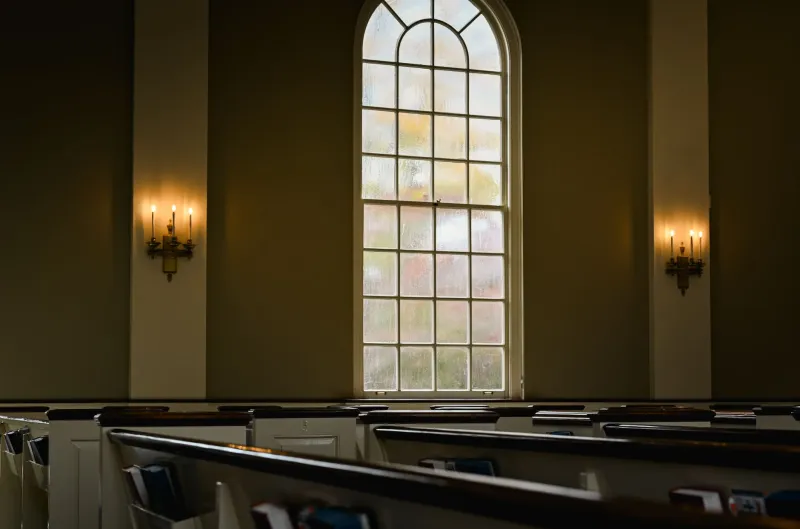
There is a confession that American Christians rarely permit themselves to make aloud: Sunday morning has become exhausting. Not because it demands too much, but because it performs too hard. The lights are calibrated. The transitions are rehearsed. The sermon illustrations are drawn from the week's trending news cycle. And somewhere beneath all of it, the actual work of making a disciple is quietly going undone.
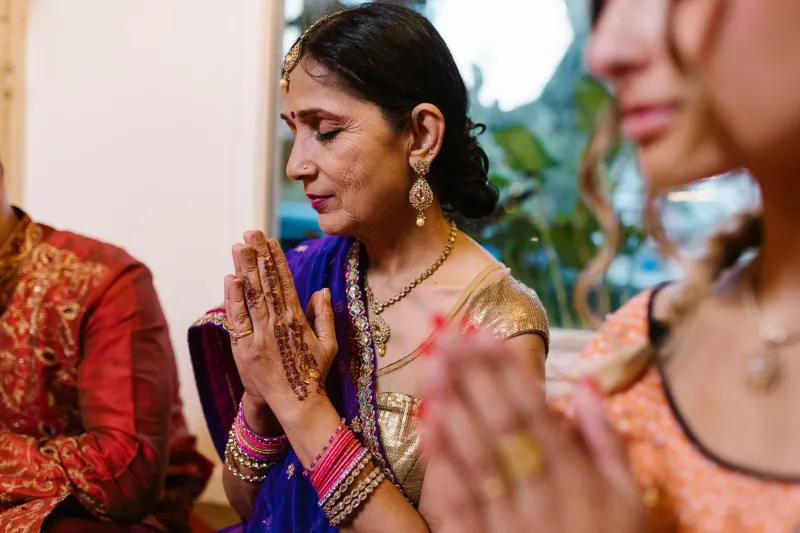
From the parishes and formation houses of Patna, the view looks rather different.
The Entertainment Industrial Complex Inside the Church
Sometime in the late twentieth century, American Christianity absorbed a set of assumptions from consumer culture that it has never fully interrogated. Chief among them: if people are not engaged, they are not growing. If the service is not compelling, the faith is not working. If attendance is declining, the product needs refreshing.
The consequences have been significant. Entire church-growth industries rose to meet the demand for novelty. Sermon series were packaged with graphic design budgets. Worship sets were engineered for emotional peaks. Youth ministries competed with entertainment venues for the attention of teenagers. The implicit promise threading through all of it was that Christianity, properly presented, would never be dull.
What this produced was not a generation of formed disciples. It produced a generation of spiritual consumers who had been trained to evaluate their faith communities the way they evaluated streaming services — by the quality of the content and the freshness of the experience.
When the experience grew stale, they moved on. And they called it discernment.
What Repetition Actually Does
In Patna, the rhythms of Christian community have long been shaped by constraint rather than creativity. Resources are limited. Production value is essentially nonexistent. The liturgy does not change because someone in leadership decided it needed freshening up. The prayers recited on a Tuesday morning in a small parish chapel are, in many cases, the same prayers recited in that chapel ten years ago and twenty years before that.
American observers, encountering this for the first time, often experience something close to pity. It looks, from the outside, like stagnation.
But ask the people who have prayed those prayers across decades, and a different account emerges. Repetition, they will tell you, is not the enemy of meaning. It is frequently the precondition for it. The first hundred times you pray a particular collect or recite a particular psalm, you are learning its surface. Somewhere after that, the words begin to pray themselves into you. The practice is no longer something you do. It becomes something that is slowly doing something to you.
This is what the tradition has always called formation. It is, by design, slow. It is not supposed to feel like progress. And it almost never feels exciting.
Boredom as Spiritual Threshold
There is a specific kind of discomfort that arises when a person sits with a practice long enough to exhaust its novelty and not yet long enough to discover its depth. Every serious contemplative tradition has a name for this threshold. The desert fathers called it acedia. John of the Cross described its contours in the dark night of the soul. Ignatius built an entire discernment framework around the movements that occur when consolation gives way to desolation.
What all of these traditions share is the conviction that this uncomfortable middle space — what contemporary Americans would simply call boredom — is not a sign that something has gone wrong. It is a sign that something important is beginning.
The American church's frantic effort to eliminate boredom from the spiritual life has, in effect, prevented millions of believers from ever crossing that threshold. By rescuing congregants from discomfort at every turn, well-meaning leaders have inadvertently ensured that formation never gets past the entertaining surface.
The Unsexy Practices That Actually Work
The Christian communities of Patna are not romantic about their limitations. No one is arguing that scarcity is inherently virtuous or that suffering produces holiness automatically. But there is a clarity available in constrained circumstances that abundance tends to obscure.
When there is no next exciting thing to move toward, you are left with what is in front of you. The Scripture passage you have read before. The prayer you have memorized. The community you did not choose and cannot easily leave. The service project that is unglamorous and unremarkable and requires showing up again next week.
These are the conditions under which disciples have historically been made. Not in spite of their ordinariness, but through it.
The daily office — prayed faithfully, without variation, across years — reshapes the practitioner's sense of time and attention in ways that no sermon series can replicate. Consistent service to the same neighbors, without the validation of a mission trip narrative or a social media post, cultivates a quality of love that is genuinely selfless because it has no audience. Sitting with the same community through conflict and boredom and grief and ordinary Tuesdays builds a kind of trust that cannot be manufactured through weekend retreat experiences.
None of this is compelling content. All of it is actual Christianity.
A Word to American Congregations
This is not an argument for bad liturgy or deliberately uninspired preaching. Excellence in worship is a form of love offered to God, and it deserves to be taken seriously. The critique here is not of quality. It is of the underlying assumption that engagement is the same thing as transformation.
Patna's faith communities have not solved every problem. They face pressures and failures of their own. But they have preserved, largely by necessity, a working understanding of what formation requires: time, repetition, community, and the willingness to remain present when the experience offers nothing immediately rewarding.
The American church does not need better production. It needs the courage to be boring — and to trust that God has always done his deepest work in exactly that kind of silence.