Ordinary Faithfulness as Rebellion: Why Steady Devotion Unsettles the American Church
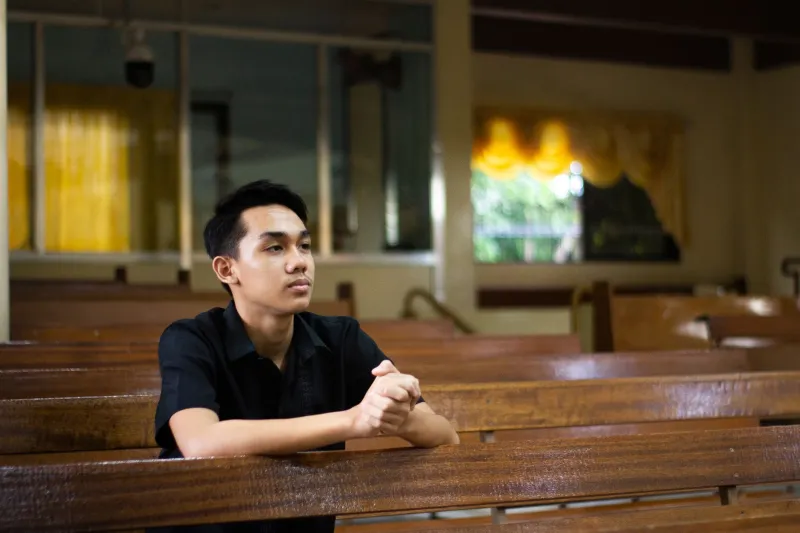
There is a particular kind of discomfort that settles over American churchgoers when nothing new is happening. No capital campaign. No guest speaker. No rebranding initiative. No momentum — at least not the kind that registers on a dashboard. In the language of contemporary church culture, this condition is frequently diagnosed as stagnation, a failure of vision, or, most damning of all, irrelevance.
But consider, for a moment, that this discomfort is not a spiritual instinct. It is a cultural one.
The Novelty Economy and Its Spiritual Consequences
American consumer culture runs on the premise that the new is inherently superior to the old. Upgrade cycles, seasonal refreshes, content drops — these are not merely commercial phenomena. They have seeped into the grammar of church life with remarkable thoroughness. Congregations speak of "pivoting," of "relaunching," of "reimagining" their mission. Pastoral success is often measured in metrics borrowed from the startup world: growth rates, engagement figures, platform reach.
In this environment, the ancient disciplines — daily prayer, weekly Eucharist, patient Scripture reading, unhurried confession — begin to look not merely modest but somehow inadequate. They produce no visible output. They resist quantification. They cannot be packaged into a sermon series or promoted with a graphic. They are, in the most precise sense of the word, boring. And boring, the American church has quietly decided, is something close to sinful.
This is not a trivial cultural preference. It is a theological distortion with real consequences for how believers understand what faithfulness actually requires.
What Patna Practices Without Apology
At Jesus and Mary Parish and within Patna's broader Christian community, the rhythm of religious life does not chase novelty. The same feasts are observed in the same sequence. The same intercessory prayers rise from the same pews, offered by different mouths across generations. Catechesis proceeds slowly, through relationship and repetition, not through immersive weekend experiences designed to manufacture breakthrough.
This is not a community that lacks imagination or ambition. It is a community that has located those energies differently — in fidelity rather than in innovation, in depth rather than in breadth.
Patna's Christians understand, in a way that is perhaps more difficult to grasp from within American abundance, that the spiritual life is not a project to be completed but a posture to be sustained. The discipline of showing up — to morning prayer, to the sick neighbor, to the fractious parish meeting — does not accumulate into a highlight reel. It accumulates into a person. And that, the tradition insists, is precisely the point.
The Hidden Radicalism of Repetition
The Church Fathers spoke of stabilitas — the monastic commitment to remaining in one place, practicing the same disciplines, with the same community, over a lifetime. Benedict of Nursia made it one of the three central vows of his Rule, alongside obedience and conversion of life. The logic was counterintuitive even then: that transformation comes not through constant movement but through the willingness to stay still long enough for God to find you.
This logic has never been easy to sell. It was not easy in sixth-century Italy, and it is considerably harder in twenty-first-century America, where geographical mobility is celebrated, attention spans are shrinking, and the idea that any single practice could be worth repeating indefinitely seems almost offensive to the entrepreneurial imagination.
And yet the evidence from communities like those in Patna — communities that have practiced steady, unspectacular faith under conditions of genuine material constraint — suggests that stabilitas produces something that novelty cannot: a people who know, in their bones rather than merely in their minds, what they believe and why it matters.
When Consistency Becomes Countercultural
There is a phrase that circulates in certain American church-growth circles: "What got you here won't get you there." It is meant as an encouragement to innovate, to adapt, to resist complacency. And in some contexts, it is sound advice.
But applied indiscriminately to spiritual formation, it becomes corrosive. Because the very things that "got us here" — the sacraments, the creeds, the disciplines of prayer and fasting and almsgiving — are not strategies to be replaced when they cease to produce measurable outcomes. They are the inheritance itself. They are what we are trying to transmit.
When a congregation in Patna gathers for the same Mass it has celebrated for generations, it is not failing to innovate. It is doing something far more demanding: it is refusing to let the market determine what is sacred.
For American Christians exhausted by the relentless pressure to refresh, to relaunch, and to remain perpetually compelling, this refusal deserves serious attention. The most radical thing many congregations could do right now is stop. Stop redesigning. Stop rebranding. Stop measuring. And simply practice the faith, in its full and unremarkable regularity, until it becomes not a program they attend but a life they inhabit.
The Long Return
None of this is an argument against thoughtful adaptation or genuine renewal. The Church has always discerned, in each age, how to speak its unchanging message to changing circumstances. That work is real and necessary.
But discernment requires a stable center from which to operate. And that center — formed through years of unglamorous, unmonitored devotion — is precisely what the novelty economy cannot provide and what communities like Patna's have quietly preserved.
The scandal of stability is not that it is boring. It is that it works. And in a culture addicted to the appearance of progress, that is perhaps the most unsettling discovery of all.


