What the Catechism Asks When It Assumes You Will Suffer
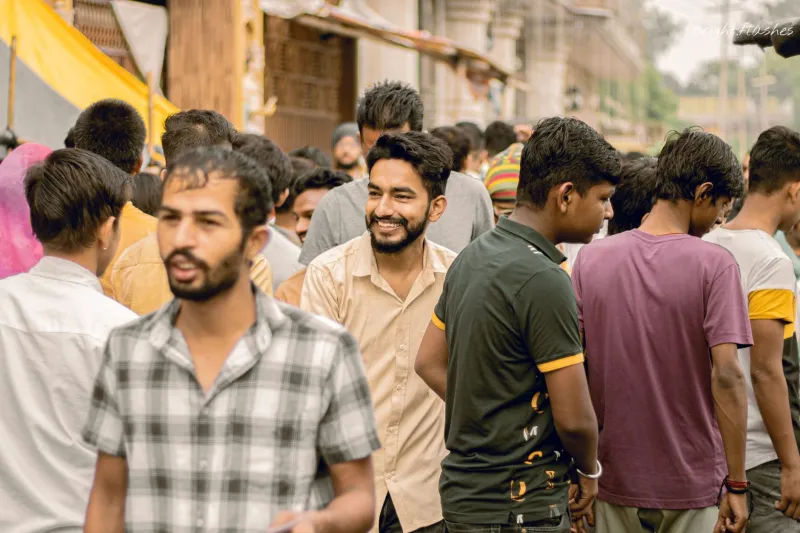
Somewhere in Patna this week, a confirmation class of fifteen-year-olds is being asked questions that would land like a stone in most American small groups. Not because the questions are harsh, but because they presuppose a different world — one in which following Christ might cost you a relationship, a job prospect, or a place in the family's good standing.
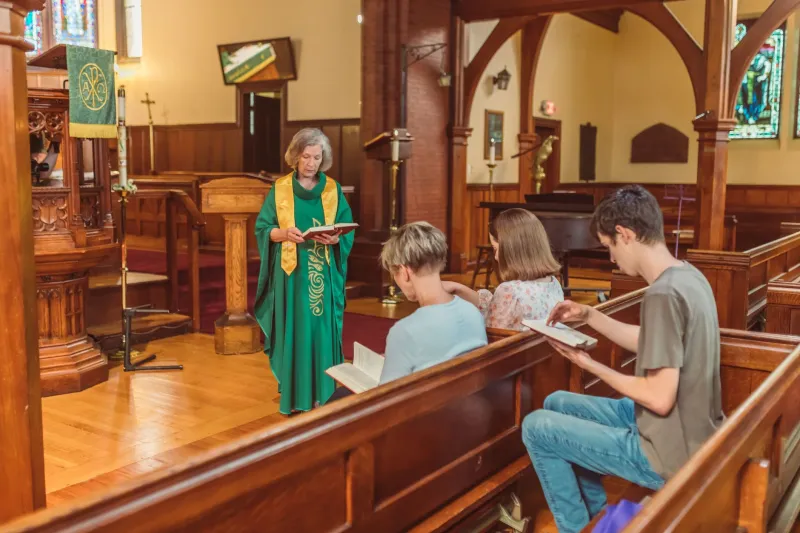
American small group culture, by contrast, has been shaped by the therapeutic defaults of its host society. The questions are gentle, open-ended, and almost always oriented inward: How are you feeling? Where are you struggling? What is God teaching you this season? These are not bad questions. But notice what they assume: that the main arena of discipleship is your interior emotional life, and that the goal of the conversation is relief.
Here are five questions from the imagined — and, in truth, not-so-imagined — Bihar confirmation class, each one an audit for the rest of us.
1. Who in your family will be disappointed when you are baptized, and have you counted that cost?
American small groups rarely ask about family cost because, for most participants, there isn't any. But the question does something no icebreaker can: it forces the distinction between belief as preference and belief as allegiance. Ask yourself the sanitized version — what has your faith actually cost you? — and see how long you can hold the silence.
2. If following Christ meant staying in one place for thirty years, could you do it?
This question assumes, correctly, that discipleship is spatial. The American instinct is to frame calling as opportunity: the next city, the better job, the platform that reaches more people. The Bihar catechist's question exposes how much of our spiritual ambition is really restlessness with a devotional vocabulary.
3. What will you do when the persecution is not dramatic but daily?
American Christians tend to imagine persecution as a courtroom or a culture-war headline. Bihari catechumens are more likely to face the slow kind — the excluded seat at the wedding, the whispered suspicion at work, the relative who will not eat at your table. Daily contempt requires a different stamina than dramatic confrontation, and it is the kind our discipleship almost never trains.
4. Whose faith are you carrying, and who is carrying yours?
Note the direction of this question: outward and backward. It presumes faith is held in common, embedded in generations, not a private devotional project. Compare it with the small group staple, "What is God teaching you personally?" — a question that can be answered for years without ever once requiring you to depend on another human being.
5. When God does not rescue you, will you still pray?
This is the question underneath all the others, and it is nearly unaskable in an American context because our frameworks quietly promise that faithful prayer produces favorable outcomes. The Bihar catechist does not promise that. The question is not pessimistic; it is honest. It asks whether God Himself, apart from His benefits, is the prize.
Soothing or Forming
Run your own group's questions through this filter. Do they assume the participant is fragile and needs comfort, or unfinished and needs formation? Do they aim at relief or at endurance? There is a place for tenderness in Christian community — of course there is. But a diet of only soothing questions produces believers who cannot stand when the soothing stops.
The point is not to import Bihar's questions wholesale. It is to notice that the questions a community asks its young reveal exactly what it believes discipleship is for. Ours might need rewriting.