Forgotten on Purpose: What Patna's Unnamed Faithful Reveal About the Church's Addiction to Being Seen

There is a particular kind of anxiety that has settled into the bones of American Christianity, one that does not announce itself loudly but reveals itself in small, telling ways. It appears in the pastor who checks weekend attendance figures before Sunday lunch. It surfaces in the congregation that measures its faithfulness by the size of its building campaign. It shows up in the theological conference where speakers are chosen not for the depth of their insight but for the reach of their platform. The anxiety has a name, though churches rarely use it plainly: the terror of obscurity.
Patna does not share this terror. Or rather, the faith communities rooted here have, over long generations, made a kind of peace with invisibility that most American congregations would find genuinely difficult to comprehend.
The Metrics We Mistake for Mission
It would be unfair to suggest that American churches pursue visibility out of pure vanity. The motivations are often sincere. Growth, after all, implies reach. Influence, in theory, means more people served, more lives changed, more good accomplished in the world. The logic is not entirely without merit.
But logic, unchecked by wisdom, has a way of quietly inverting itself. The congregation that begins by seeking growth in order to serve the poor gradually becomes a congregation that serves the poor in order to demonstrate growth. The ministry that once measured success by transformed lives begins measuring transformed lives as content for its annual report. The shift is subtle. The consequences are not.
What gets lost in this inversion is something theologians have long called the prophetic voice—the capacity of the church to speak inconvenient truth to power precisely because it has nothing to protect, no reputation to guard, no donor base to alienate. A church addicted to its own visibility cannot afford the cost of genuine prophecy. It has too much to lose.
Generations Without a Headline
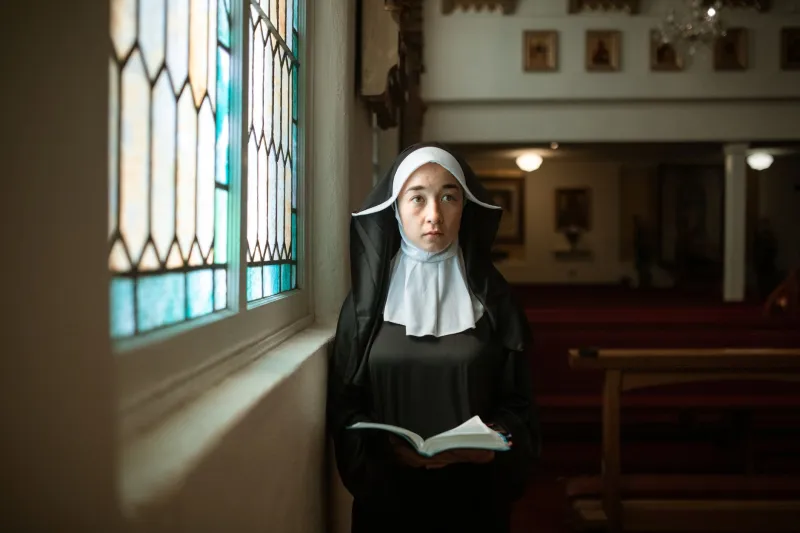
In the neighborhoods surrounding Patna's older parishes, there are women and men whose names will never appear in any institutional record of note. They are catechists who taught scripture in borrowed rooms for forty years. They are nurses who staffed understaffed clinics in the name of a faith that asked nothing in return. They are teachers in modest schools who poured themselves into children whose families could offer no social currency whatsoever.
None of them built platforms. Several of them actively resisted recognition when it was occasionally offered. One is reminded of a quality that the Christian tradition has historically called hiddenness—a deliberate withdrawal from the economy of reputation, not out of false humility, but out of a settled conviction that the work itself is the point, and that an audience is, at best, irrelevant.
This is not passivity. These are not people who drifted into obscurity through a lack of ambition. Their hiddenness is, in many cases, a chosen posture, shaped by a theological understanding that what God sees is categorically more significant than what any institution records. That conviction does not make them naive. It makes them free.
What Freedom From Legacy Actually Looks Like
American readers may find it useful to consider what this freedom produces in practice, because it is not what one might expect. Communities unconcerned with their own legacy do not become passive or directionless. Quite the opposite. When an institution stops spending energy on its own reputation, a remarkable amount of that energy becomes available for other purposes.
Patna's faith communities have, over time, developed a striking capacity for long-term, unglamorous commitment. They sustain programs that will not produce results within a grant cycle. They invest in relationships that will not yield measurable outcomes. They continue working in situations that have not improved and may not improve, because their motivation is not tied to the production of a success narrative.
This is precisely the kind of endurance that the American church, for all its resources, frequently struggles to sustain. When visibility is the implicit goal, the absence of visible results feels like failure. When it is not, the work simply continues.
The Prophetic Consequence of Letting Go
There is a deeper implication here, one that bears careful consideration. The church's prophetic function—its ability to challenge unjust systems, to name what polite society prefers to leave unnamed, to stand with the marginalized at genuine cost to itself—depends on a particular kind of institutional detachment. It requires the willingness to be disliked, dismissed, or simply ignored.
A church that has made peace with obscurity is, paradoxically, far better positioned to exercise prophetic courage than one that has built its identity around influence. The former has nothing to lose. The latter, having constructed an elaborate architecture of relevance, finds that architecture constantly threatened by any stance that might alienate a significant constituency.
This is not an abstract observation. It plays out in concrete decisions made by real congregations every week. Which issues will the pastor address from the pulpit? Which partnerships will the institution pursue, and which will it decline? Whose presence will be welcomed at the table, even at the risk of making others uncomfortable? These are not merely strategic questions. They are spiritual ones, and they are answered, in large part, by how deeply a community has released its grip on being remembered.
A Different Measure of Legacy
To be clear, this is not an argument against Christian institutions caring about their work or their communities. Stewardship is a genuine virtue, and there is nothing holy about carelessness. The question is not whether the church should take its mission seriously. The question is whether it has confused the mission with the institution that carries it.
Patna's hidden saints have, by and large, not made that confusion. They have understood, at a level that is difficult to articulate but impossible to miss in their presence, that the legacy worth leaving is not the one that gets written down. It is the one that continues quietly in the people who were shaped by a faithful life—the student who became a teacher, the patient who became a caregiver, the child who grew up watching someone love without calculation and decided, without fully knowing why, to do the same.
That kind of legacy leaves no institutional record. It generates no metrics. It cannot be cited in a funding proposal or featured in a church anniversary publication. And it may, in the end, be the only kind that genuinely endures.
American Christianity would do well to sit with that possibility for a long, uncomfortable moment—and then, perhaps, to begin the slow work of becoming less afraid of being forgotten.