Grounded in This Ground: How Patna's Christians Find God in the Particular, Not the Generic
There is a temptation, especially in an age of global connectivity and mass-produced devotional content, to treat Christianity as a kind of universal solvent — a faith that dissolves local peculiarities in favor of something clean, transferable, and broadly palatable. Worship styles travel across continents within months. Theological frameworks developed in suburban American megachurches are packaged and exported to communities in Asia, Africa, and Latin America as though geography were merely a logistical inconvenience rather than a theological category.
Patna's Christian communities have, for generations, quietly refused this bargain.
To understand why requires a closer look at what theologians sometimes call the "scandal of particularity" — the uncomfortable Christian claim that God did not enter the world as a universal principle, but as a specific person, born in a specific place, at a specific historical moment, within a specific people. If that logic holds any weight, then the communities formed in His name ought to take their own specific places and histories with equal seriousness.
A City That Remembers
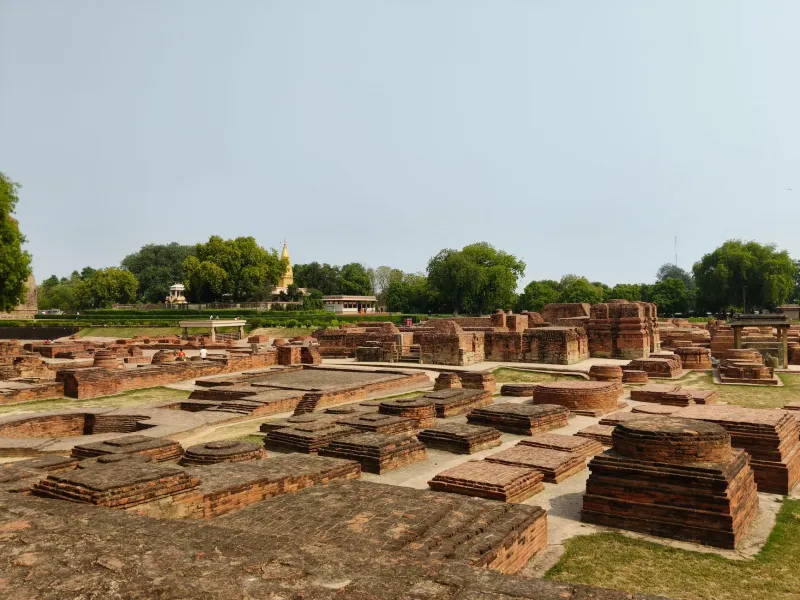
Patna is not a blank canvas. It is one of the oldest continuously inhabited cities in the world, carrying within its geography the sediment of empires, religious movements, and intellectual traditions that predate most Western nations by centuries. The Mauryan Empire administered its affairs from here. The Sikh faith's tenth Guru, Gobind Singh, was born within its boundaries. The Ganges, which flows alongside the city, has served as a living symbol of both physical and spiritual sustenance for millennia.
For Patna's Christian communities — many of whom trace their institutional roots to missionary endeavors that arrived during the colonial period, and some of whom claim connections to far older traditions — this layered local history is not background noise. It is, rather, the very soil in which their particular expression of faith has taken root.
Faith communities here do not speak of Christianity as though it arrived in Patna from nowhere and planted itself in a vacuum. They speak of encounter — of a faith tradition meeting an ancient civilization and producing something neither purely European nor reducible to the categories of global evangelical culture. That encounter, with all its complications and tensions, is treated as theologically significant in its own right.
The Discipline of Local Memory
One of the most striking practices within several of Patna's Christian educational and faith institutions is a deliberate attention to local hagiography — the stories of local believers, teachers, and servants whose names rarely appear in any globally circulated devotional publication. These are not famous saints canonized by Rome or celebrated in bestselling Christian biographies sold at airport bookstores. They are ordinary figures whose faithfulness was expressed within the specific pressures, relationships, and landscapes of Bihar.
This practice of local memory functions as a form of theological resistance. It insists that God's activity is not exhausted by the stories that happen to get amplified through global media channels. It suggests that the congregation gathered in a modest building in Patna, navigating the particular social complexities of their neighborhood, is not a peripheral footnote to "real" Christianity happening elsewhere — but rather a legitimate and irreplaceable expression of the faith in its own right.
For American Christians accustomed to measuring their congregations against the metrics and models of the nation's most prominent churches, this posture carries a quiet rebuke. The question it implicitly poses is direct: Do you know the particular history of faith in your own place? Do you know the names of those who prayed and served and suffered in the specific ground beneath your feet before you arrived?
Regional Theology as Honest Theology
Patna's faith communities also demonstrate a willingness to engage regional theological traditions — including those of their non-Christian neighbors — with genuine intellectual seriousness rather than defensive dismissal. The proximity of Buddhist, Hindu, Jain, Sikh, and Islamic thought is not experienced primarily as a threat to be managed, but as a context that sharpens and enriches theological reflection.
This does not mean doctrinal indifference. The communities at institutions like Jesus & Mary have maintained clear confessional identities across decades of social and political change. But they have done so while remaining genuinely curious about the wisdom embedded in the surrounding religious landscape — a curiosity that has, in turn, produced theological reflection that feels rooted and honest rather than imported and defensive.
The contrast with certain strands of American Christianity is instructive. Much of the United States' dominant evangelical culture has, particularly in recent decades, retreated from genuine intellectual engagement with other traditions, preferring instead a kind of fortress theology that mistakes insularity for faithfulness. Patna's approach suggests an alternative: that a community confident in its own particular history and identity has less reason to fear honest encounter with difference.
What American Christians Might Recover
The application for American faith communities is neither simple nor sentimental. The United States is itself a place with a complicated and specific religious history — one that includes both extraordinary faithfulness and profound moral failure. The Puritan settlers of New England, the enslaved Africans who forged a theology of liberation under conditions of unimaginable suffering, the Catholic immigrants who built parishes in the industrial cities of the Midwest, the Indigenous communities whose spiritual traditions were systematically suppressed — all of these are part of the particular story of Christianity in America.
Most American congregations know remarkably little of this history as it pertains to their own specific localities. They know the national narratives, curated and sanitized, but not the names of those who prayed in the building they now occupy, or the social forces that shaped the community their congregation serves.
Patna's Christians model a different approach. They suggest that attending to one's own particular history — with honesty about both its grace and its failures — is not a distraction from faith but a discipline of it. To know where you are, and how the faith came to be practiced there, and what it cost, is to practice a kind of theological humility that no amount of globally branded worship content can substitute for.
The Gift No Algorithm Can Deliver
There is, finally, something that Patna's example offers which cannot be downloaded, streamed, or purchased through any subscription service: the gift of specificity itself. A faith that knows its own story, honors its own place, and remembers its own people is a faith that has something genuinely distinctive to offer the world.
Universal abstractions, however elegant, do not sustain communities through hardship. Particular memories, particular relationships, and particular commitments to particular places do. The Christians of Patna have understood this not as a theological luxury but as a practical necessity — and in doing so, they have preserved something that much of the global church, in its hunger for scalability, has inadvertently discarded.
The question for American Christians is whether they are willing to do the slower, less glamorous work of recovering it.