Unplug to Pray: What Patna's Contemplative Communities Know About Silence That Silicon Valley Cannot Sell You
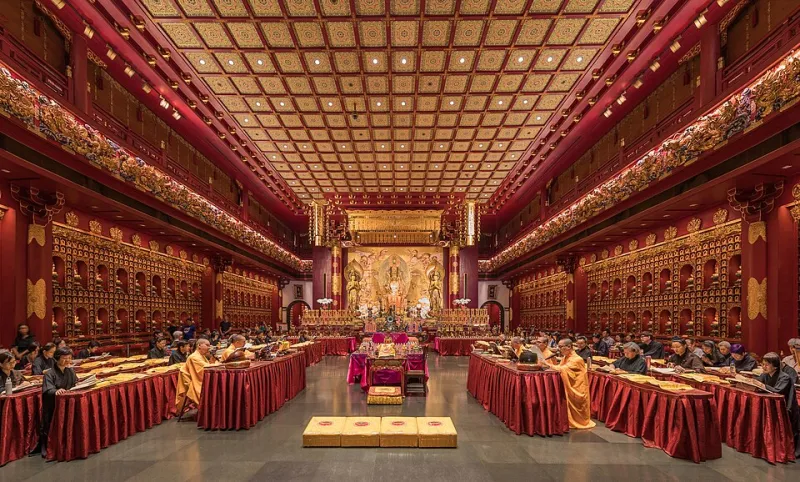
Photo: Basile Morin, CC BY-SA 4.0, via Wikimedia Commons
The average American unlocks their phone 96 times per day. That figure, drawn from research by app analytics firm Asurion, works out to roughly once every ten minutes during waking hours. For many believers, this relentless rhythm of tap, scroll, and respond has quietly colonized the very hours once reserved for prayer, reflection, and what older spiritual traditions simply called waiting on God.
In Patna, the capital of Bihar in northeastern India, a different rhythm has been kept — sometimes for centuries. Within the walls of the city's Christian institutions and contemplative communities, silence is not an absence to be filled. It is, as one spiritual director here describes it, "the first language of the soul."
For American Christians and spiritual seekers grappling with digital exhaustion, the contemplative inheritance of communities like those gathered around Jesus & Mary Patna offers something the wellness industry has largely failed to deliver: a practice of stillness that is theological before it is therapeutic.
The Architecture of Silence
Patna's Christian history is older than many Americans realize. Augustinian friars arrived in Bihar in the sixteenth century, and over subsequent generations, a tradition of structured contemplative practice took root that drew simultaneously from Catholic monastic discipline and the broader Indian spiritual landscape, in which silence has always carried profound metaphysical weight.
Sister Anita, a spiritual director who has guided retreatants at a Patna religious house for more than two decades, describes the community's daily rhythm to visitors with characteristic simplicity: "We rise before the city wakes. We pray before we speak. We eat before we read. The order is not accidental."
This sequencing — silence preceding language, prayer preceding information — is the structural heart of what contemplatives here call maun, a Hindi term for deliberate, sacred quiet. Unlike secular mindfulness, which tends to frame silence as a neurological reset, the maun practiced in Patna's faith communities is explicitly relational. One falls silent not to empty the mind but to attend more fully to a divine presence that, practitioners insist, is perpetually speaking beneath the noise.
Father Thomas, a Jesuit retreat director associated with institutions in the Patna diocese, draws a distinction that American audiences may find clarifying. "Mindfulness asks you to observe your thoughts without judgment," he explains. "Contemplative prayer asks you to lay your thoughts down entirely — not because they are bad, but because something better is available when they are quiet."
What the Research Suggests — and What It Misses
The secular case for silence is by now well-documented. Studies published in journals including Heart and Brain Structure and Function have linked regular periods of quiet to reduced cortisol levels, improved memory consolidation, and measurable growth in the hippocampus. The mindfulness industry in the United States, valued at over two billion dollars annually, has commodified these findings into apps, retreats, and workplace wellness programs.
Yet practitioners in Patna's contemplative communities point to a dimension of silence that the clinical literature tends to bracket: its capacity to produce not merely calm but conversion — a reorientation of desire, attention, and ultimately identity.
Sister Anita notes that retreatants who arrive at her community's programs — including a growing number of visitors from Europe and North America — frequently report that secular mindfulness left them feeling "rested but unchanged." The contemplative prayer practices she teaches, rooted in the Christian tradition of lectio divina and the ancient hesychast methods of stillness, aim at something more disruptive than relaxation. "True silence," she says, "makes you uncomfortable before it makes you free."
Practical Methods for an American Context
For American believers who cannot book a flight to Bihar, the Patna contemplative tradition nonetheless offers transferable practices that require no exotic setting and no special equipment.
The Threshold Practice. Many Patna religious communities observe what Father Thomas calls a "threshold rule": no device is consulted for the first thirty minutes after waking and the last thirty minutes before sleep. These bookend periods are given to prayer, slow Scripture reading, or simple, wordless attention. The logic is architectural — the day is framed by silence rather than by a news feed. American practitioners who have adopted this discipline consistently report that it alters not just morning mood but the quality of attention they bring to conversations and decisions throughout the day.
Breath-Anchored Petition. Drawn from both the Eastern Christian Jesus Prayer tradition and the breathing disciplines common in Indian spiritual practice, this method pairs a single short prayer phrase — "Lord, have mercy" or simply "Be still" — with the natural rhythm of inhalation and exhalation. It requires no designated prayer time and can be practiced during a commute, a lunch break, or the anxious minutes before a difficult meeting. Sister Anita teaches it as a way of "stitching the sacred into the ordinary seam of the day."
The Weekly Fast from Noise. Several Patna communities maintain a practice of one technology-free evening per week, not as a rule imposed from outside but as a communal commitment renewed together. For American congregations, translating this into a shared parish or small-group practice — rather than an individual resolution — appears to significantly improve adherence and, more importantly, generates the communal dimension that makes silence spiritually generative rather than merely solitary.
Silence as Resistance
There is a quietly countercultural dimension to what Patna's contemplative communities practice that deserves naming directly. In an economy that profits from fragmented attention — where every notification is an invitation to consume, react, or perform — the deliberate cultivation of interior silence is not merely a spiritual discipline. It is, in a meaningful sense, a refusal.
Father Thomas makes this point without apology. "The notification is designed to make you feel that something important is happening somewhere else," he observes. "Silence teaches you that the most important thing is always happening right here, in the present moment, in the presence of God."
For American Christians who have found that their faith life has been gradually hollowed out by the same digital pressures affecting every other area of their existence, the contemplative inheritance of communities like those in Patna offers a resource that is neither nostalgic nor naïve. It is, rather, a set of tested, theologically grounded practices developed by people who understood — long before the algorithm existed — that the human soul requires stillness to hear what it most needs to know.
The silence is available. The only question, as it has always been, is whether we are willing to enter it.