Enough Is Enough: How Patna's Renunciate Communities Quietly Dismantle the Gospel of Getting More

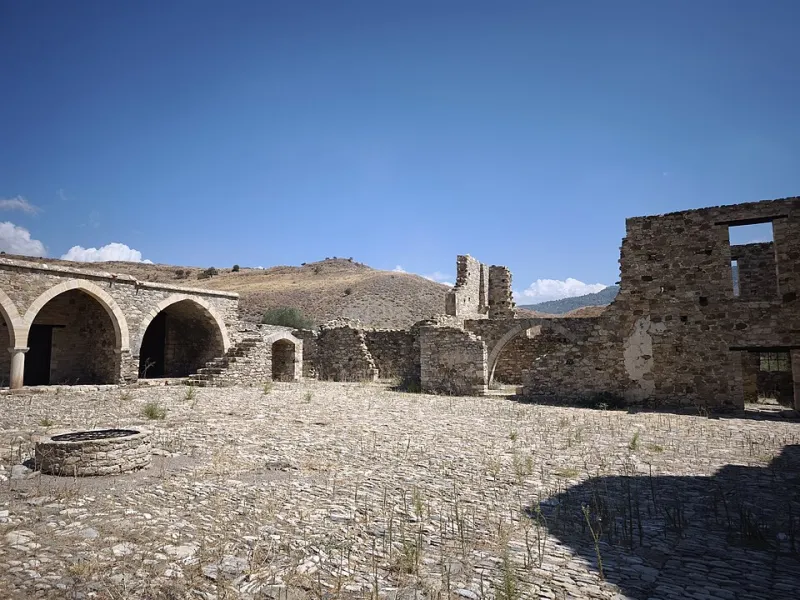
Photo: monastic simplicity prayer contemplation India religious community, via c8.alamy.com
When Blessing Looks Like Letting Go
There is a particular kind of sermon that has become almost liturgical in certain American Christian spaces. It carries a familiar arc: God desires your flourishing, your flourishing looks like financial increase, and your faith — properly deployed — is the mechanism by which that increase arrives. This framework, broadly called prosperity theology, has shaped the spiritual expectations of millions of American churchgoers. It has built megachurches, launched television ministries, and sold countless books.
And then there is Patna.
In the faith communities surrounding the institutions that have long anchored Christian life along the Ganges, a very different theological grammar governs the pursuit of the holy. Renunciation — the deliberate, structured relinquishment of material comfort — is not treated as spiritual punishment or as a concession to poverty. It is understood, across both the city's Catholic religious orders and its older Hindu-inflected ascetic traditions, as a pathway toward a kind of freedom that acquisition cannot purchase.
For American readers, this contrast is not merely interesting. It is, in the most precise sense of the word, challenging.
The Architecture of Voluntary Simplicity
Patna's monastic and semi-monastic communities — including the religious sisters and brothers who have served its schools and hospitals for generations — organize their common life around a principle of sufficiency. The question these communities ask is not how much can we obtain? but rather how little do we actually require?
This is not romantic poverty. The men and women who practice voluntary simplicity in Patna's faith institutions are not performing deprivation for its own sake. They live, study, pray, teach, and serve within structures that provide what is genuinely needed. But those structures are intentionally resistant to excess. Personal accumulation is discouraged not because wealth is inherently sinful, but because the community's collective witness depends on demonstrating that spiritual depth and material restraint are, at minimum, compatible — and perhaps more than compatible.
The theological logic here draws on a tradition far older than American evangelicalism. It echoes the Desert Fathers and Mothers of early Christianity, the Franciscan charism of poverty as liberation, and the broader South Asian spiritual inheritance in which detachment from outcomes and possessions is understood as prerequisite to genuine discernment. In Patna, these streams converge in a lived practice that many Western visitors find simultaneously austere and, unexpectedly, joyful.
What Prosperity Theology Actually Claims
To be fair to the American tradition being examined here, prosperity theology is not monolithic, and its practitioners are not uniformly cynical. At its most earnest, it represents a genuine attempt to affirm that God is not indifferent to human suffering, that material wellbeing matters, and that faith should produce tangible results in a believer's life. These are not trivial convictions.
But the framework carries embedded assumptions that Patna's renunciate communities quietly expose. Chief among these is the equation of divine favor with upward mobility. When blessing is defined primarily as increase — in income, in property, in social status — then the person who voluntarily relinquishes these things becomes, within that framework, spiritually suspect. The monk who owns almost nothing, the sister who takes a vow of poverty, the lay community member who chooses a smaller life: these figures don't compute in the prosperity model.
And yet, in Patna, these are often the figures most widely recognized as spiritually authoritative.
Measuring Success by a Different Standard
What the renunciate communities of Patna offer is not an argument against material wellbeing but an alternative metric for spiritual success. In these communities, the markers of a well-lived faith life include depth of prayer, quality of service to others, the capacity for genuine stillness, and what might be called the freedom of non-attachment — the ability to hold circumstances lightly because one's fundamental security is not located in them.
This is a profoundly countercultural proposal for American Christians, and not only for those drawn to prosperity theology. American culture more broadly — its advertising, its social media architecture, its definition of the good life — is organized around the premise that more is better and that accumulation signals success. The church, in many of its expressions, has absorbed this premise rather than contested it.
Patna's monastic tradition contests it. Not loudly, not polemically, but simply by existing — by demonstrating, generation after generation, that communities organized around voluntary simplicity can sustain deep joy, remarkable intellectual vitality, and extraordinary service to the poor.
A Practical Theology of Enough
For American congregations willing to take this tradition seriously, the implications are practical rather than merely philosophical. They might include a willingness to interrogate the language used in stewardship campaigns — asking whether the framing of giving is still subtly transactional, still implying that generosity will be rewarded with material return. They might include a recovery of fasting and other ascetic disciplines not as punishment but as training in the experience of sufficiency. They might include a deliberate celebration of members who choose smaller lives: who decline promotions, who downsize homes, who give away more than seems prudent.
These are not calls to poverty for its own sake. They are invitations to discover what Patna's renunciate communities have long known — that the person who has learned to need less is, in a very real sense, freer than the person who has learned to want more.
The Question That Remains
The paradox at the heart of this conversation is not easily resolved. American Christians live in a material context dramatically different from Patna's monastic institutions. Mortgages, student loans, healthcare costs, and retirement planning are not spiritual distractions — they are genuine responsibilities. The renunciate life is not available to everyone, nor should it be universally prescribed.
But the question Patna's tradition poses to American consumer Christianity does not require a monastic vow to take seriously. It simply asks: What if blessing was never primarily about increase? What if the spiritual life was always, at its core, about learning to receive what is sufficient and release what is surplus?
That question, asked honestly, has the potential to reshape not only individual spiritual practice but the institutional culture of American Christianity itself. It will not be answered quickly. But it is worth sitting with — perhaps in the kind of deliberate stillness that Patna's communities have been practicing for a very long time.