Unglamorous Grace: How Patna's Christian Communities Practice Mercy Without an Audience
There is a woman in Patna's Rajendra Nagar neighborhood who has received a bag of groceries, a brief visit, and a shared prayer every single week for the past eleven years. She is a widow in her seventies. She has never been featured in a newsletter. No photograph of her doorstep has circulated on Instagram. No fundraising thermometer has tracked the cumulative cost of those weekly visits. And yet, by every serious theological measure, what has been offered to her constitutes one of the more faithful acts of Christian charity taking place anywhere in the world today.
The communities at Jesus and Mary Patna have long observed what might be called the scandal of small mercy—a deliberate, countercultural commitment to sustained, unglamorous care that stands in sharp contrast to the high-visibility philanthropic models that dominate much of Western Christian culture. Understanding why these communities choose this path, and what it costs them to maintain it, offers a genuinely challenging word to American congregations that have grown comfortable equating generosity with spectacle.
The Architecture of Quiet Care
Patna's Christian charitable networks did not arrive at their current approach through accident or mere resource constraint. Sister communities affiliated with institutions across the city have, over decades, built what might be described as an architecture of quiet care—structures of relationship and commitment designed not for periodic, high-impact interventions but for the long, slow work of accompaniment.
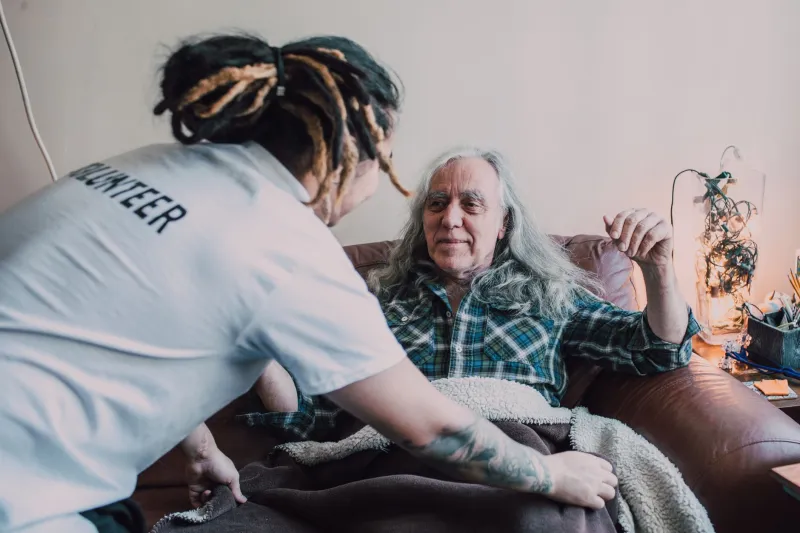
Consider the widow support networks that operate out of several parishes in the older quarters of the city. These programs do not resemble the disaster-relief model so familiar to American donors, wherein a crisis generates an outpouring of funds, attention, and volunteers who gradually disperse as urgency fades. Instead, they function according to a different logic entirely: a logic of covenant rather than campaign. Specific volunteers are paired with specific widows for periods of years, sometimes decades. The care offered is deliberately modest in scope—practical assistance with household tasks, regular conversation, accompaniment to medical appointments, and consistent prayer—but extraordinary in its durability.
The theological conviction underlying this structure is straightforward, even if its implications are demanding. Mercy, in the tradition these communities inhabit, is not primarily an emotion or an impulse. It is a practice, and like all practices, it requires repetition, patience, and a willingness to continue when the initial warmth of feeling has long since dissipated.
When Children Need More Than a Donor
The orphan mentorship programs associated with faith institutions in Patna tell a similar story. American charitable culture has, for better and for worse, developed a robust infrastructure around child sponsorship—a model in which a donor in, say, suburban Ohio contributes a monthly sum in exchange for letters and photographs from a child in the developing world. The model is not without genuine value, but it carries a structural limitation: it positions the donor as the primary agent of transformation and the child as the recipient of a transaction.
Patna's faith communities have largely built their programs around a different center of gravity. Mentorship here means consistent, face-to-face presence: an adult from the local community who shows up, regularly and reliably, to help a child navigate schoolwork, process grief, understand faith, and develop the habits of character that no curriculum can install on its own. The relationship is, by design, non-transactional. There is no photograph to send home, no progress report engineered for donor consumption. There is only the slow, largely invisible work of a trusted adult choosing, week after week, to be present in a child's life.
This is not a scalable model in the sense that Silicon Valley or large American nonprofit organizations typically prize scalability. It cannot be replicated through an app or expanded through a viral campaign. It scales only as individual human beings are formed, through their own communities and traditions, into the kind of people willing to make and keep such commitments.
The Particular Demands of Chronic Illness
Perhaps no dimension of Patna's quiet care ministry is more challenging—or more theologically instructive—than the accompaniment offered to those living with chronic illness. Acute illness generates sympathy and mobilizes community response with relative ease. The dramatic quality of a medical crisis, the clarity of a specific need, the narrative arc of recovery or loss: these elements make acute illness legible to communities organized around periodic acts of care.
Chronic illness offers none of these affordances. It does not resolve. It does not generate a clear narrative arc. It demands not a single heroic intervention but an endless series of ordinary ones: rides to treatment, help with medical paperwork, the willingness to sit with someone whose suffering has become, to the outside world, simply a background condition of their existence.
Faith communities in Patna have, in many cases, developed explicit structures for precisely this work. Small groups organized around particular families facing long-term illness rotate responsibilities in ways designed to prevent the burnout that inevitably follows when care is left to a single dedicated individual. Prayer accompaniment is treated not as a supplement to practical care but as integral to it—a recognition that the person suffering requires not only assistance but witness, not only help but the knowledge that their struggle is seen and held by a community that will not grow bored and move on.
What This Costs, and Why It Matters
It would be dishonest to romanticize this approach without acknowledging what it demands. Communities in Patna that have committed to sustained, unglamorous care frequently struggle with the same exhaustion and attrition that affect charitable organizations everywhere. The work is hard. The visibility is low. The emotional rewards of spectacular generosity—the rush of the fundraising gala, the gratification of the viral campaign—are simply absent.
And yet the communities that persist in this work tend, over time, to develop something that high-visibility philanthropy rarely produces: genuine transformation, in both the people served and the people serving. The volunteer who has spent a decade visiting the same elderly widow is not the same person she was when she began. She has been formed by the relationship, shaped by the encounter with another person's vulnerability and dignity, changed in ways that no single dramatic act of generosity could have accomplished.
For American congregations, this witness carries a pointed challenge. The dominant models of charitable giving in the United States are, in many respects, designed to protect donors from precisely this kind of transformation. They allow generosity to remain transactional, comfortable, and safely distant from the messiness of actual human need. Patna's communities suggest that this is not mercy at all—or not mercy in its fullest sense—but rather a sophisticated form of charity that serves the giver's need for significance more than the recipient's need for care.
A Different Measure of Faithfulness
The woman in Rajendra Nagar who has received her weekly visit for eleven years will not appear in anyone's annual report. The children whose mentors have shown up, quietly and consistently, through every difficult season of their adolescence will not generate a compelling fundraising video. The families navigating chronic illness who have been accompanied, week after week, by rotating teams of volunteers will not trend on any platform.
None of this, in the tradition that shapes Jesus and Mary Patna, constitutes a failure of witness. It constitutes, rather, its most authentic expression: mercy practiced without an audience, sustained without applause, and offered in the conviction that the God who sees in secret is the only audience that finally matters.
American churches that find themselves increasingly dependent on the metrics of visibility and scale might do well to sit with that conviction for a while—and to consider what it would cost, and what it might produce, to build their charitable lives around it.