When the Feast Outlasts the Ceremony: Patna's Wedding Rhythm and the American Marriage Deficit
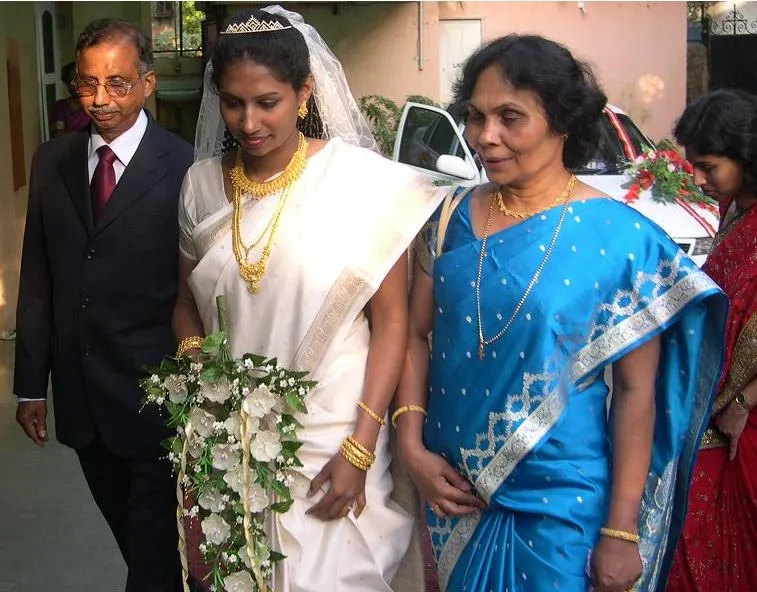
Photo: Unknown, CC BY 2.0, via Wikimedia Commons
In the United States, a wedding is often planned like a film shoot. There is a venue, a photographer, a color palette, a seating chart, and a budget that can rival a down payment. The couple spends months preparing for a single afternoon. Guests arrive as an audience, watch a ceremony, eat a meal, and leave. The next morning, the couple is alone with the photographs, the receipts, and a marriage that now has to survive without the crowd.
Patna's wedding culture often moves in a different rhythm. The celebration is frequently extended over several days, with prayer, meals, music, visits, and the steady presence of family and parishioners. The details vary by family and church, but the underlying logic is consistent: a wedding is not only a ceremony between two people. It is the public reception of a new household into a community that intends to remain involved.
That contrast is not a reason to romanticize India or scold American couples. It is a reason to ask what American churches are actually preparing couples for.
The Production and the Vow
The American wedding industry is very good at producing memorable events. It is less good at producing durable communities around those events. A couple can spend tens of thousands of dollars on a reception and still have no one who will call them six months later when the marriage is struggling. The ceremony is public, but the marriage often becomes private—sometimes dangerously private.
A Patna-style wedding feast does not automatically create a healthy marriage. No ritual does. But the extended celebration makes visible what the vows imply: this marriage is not a transaction between two individuals. It is a new relationship within a network of families, neighbors, and parishioners. The couple is seen, named, fed, and surrounded. The community is not merely watching. It is taking part.
What a Longer Feast Does
Time does something that money cannot. A multi-day celebration gives the community time to recognize the couple, not just applaud them. It gives older women and men a chance to offer practical wisdom. It gives relatives space to reconcile. It gives the parish a chance to pray over the couple repeatedly rather than once. It also gives the couple a taste of what marriage will require: patience, hospitality, negotiation, and the ability to receive help.
None of this is magic. Extended weddings can be expensive, exhausting, and fraught with family politics. But the form carries a conviction worth recovering: marriage is a communal reality. The couple does not vanish after the rice is thrown. They remain inside a web of relationships that has some stake in their faithfulness.
The Church's Work After the Reception
American churches often treat marriage preparation as a required class and the wedding as a liturgical event. After that, the couple is largely on its own. This is a structural failure, not merely a pastoral oversight. If a parish celebrates a marriage, it should also plan for the marriage.
Congregations can adapt the wisdom of Patna's feast without copying its scale. A parish could commission the couple publicly at a Sunday Mass, not only at the wedding. It could assign an older couple to check in at regular intervals—not to intrude, but to offer friendship. It could host a simple meal for newly married couples and their sponsors. It could maintain a small fund for practical needs, such as childcare or counseling, without turning the couple into a charity case. It could teach the congregation that marriage is a ministry of the whole church, not a private hobby of the couple.
Practical Lessons for U.S. Congregations
First, shrink the performance and enlarge the preparation. Churches can help couples budget honestly, resist the pressure of the wedding industry, and think about the first year of marriage rather than only the first dance. Second, recover the sponsor or mentor couple as a long-term relationship, not a ceremonial role. Third, put dates on the calendar: a three-month check-in, a six-month dinner, a one-year conversation. Fourth, pray for marriages by name in public worship. Fifth, make the parish a place where couples can admit difficulty without shame.
At Jesus & Mary Patna, the wedding feast is a reminder that the church's care for a marriage should outlast the ceremony. The American church does not need to imitate every detail of Patna's celebrations. It does need to recover the conviction beneath them: a marriage is a vow with witnesses, and witnesses have work to do after the feast ends.