Why Leaving Is Not the Answer: What Patna's Faithful Teach Us About the Holiness of Staying

There is a particular kind of restlessness that has come to define much of American religious life. It shows up in the language believers use — phrases like fresh start, new season, and God is calling me forward — language that frames movement itself as spiritual maturity. To stay, by contrast, is to stagnate. To remain in a difficult parish, a struggling neighborhood, or an unglamorous vocation is, within this cultural grammar, a failure of ambition dressed up in piety.
Patna's Christian communities have never quite accepted that grammar. And in their refusal, they offer something that American believers urgently need to hear.
The American Gospel of Reinvention
It would be unfair to suggest that mobility is inherently sinful. Scripture itself is filled with departures — Abraham leaving Ur, the Israelites crossing the desert, Paul moving from city to city along the Mediterranean coast. Movement has its place in the economy of grace.
But the American version of this story has drifted considerably from its biblical origins. What began as a theological affirmation of God's sovereignty over human journeys has gradually become something closer to a consumer reflex: the assumption that dissatisfaction is a signal to leave rather than an invitation to deepen. When a church community grows difficult, the instinct is to find a better one. When a neighborhood declines, the instinct is to relocate to somewhere more promising. When a spiritual practice stops producing visible results, the instinct is to try a different method.
This is not primarily a moral failing. It is a cultural formation so thorough that most American Christians do not notice it operating in their lives. The market logic of choice, optimization, and self-improvement has seeped into the spiritual imagination until departure feels like discernment and endurance feels like passivity.
What Patna Has Not Forgotten
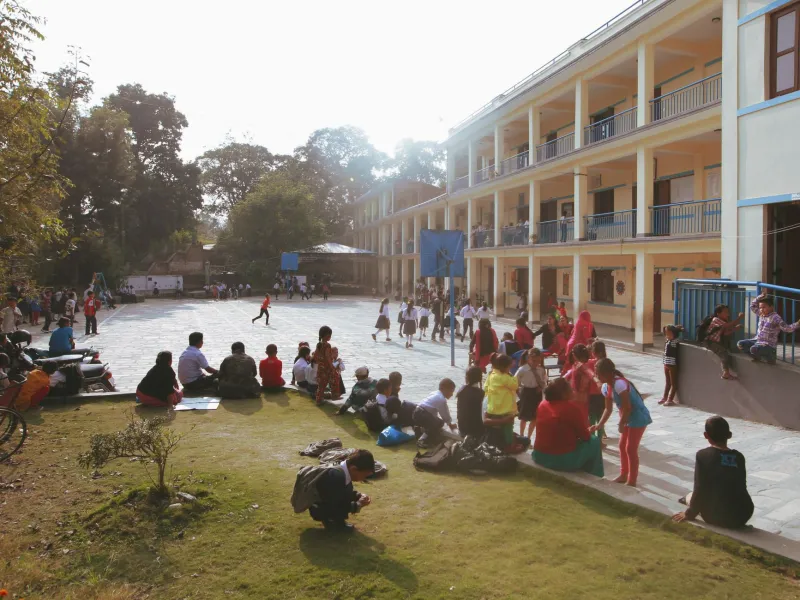
The Christian communities of Patna — many of them shaped by generations of Catholic religious life, by institutions like Jesus and Mary that have served Bihar's families for well over a century — operate within an entirely different set of assumptions.
These communities have remained through partition, through political upheaval, through floods and droughts and the particular indignities of institutional poverty. They have not remained because they were incapable of imagining alternatives. They have remained because their theological formation taught them something the market never will: that the place where you are planted is not incidental to your sanctification. It is the very medium of it.
This is not romanticism about suffering. The sisters, teachers, and lay faithful who have built their lives in Patna are not unaware of what their commitment has cost them. They understand what was foregone. But they have also discovered — slowly, often painfully — that the spiritual depth which comes from staying in one place long enough to be known, to be accountable, and to be genuinely needed is not available at any other price.
The Discipline Departure Cannot Teach
There is a particular kind of character that only forms under the pressure of sustained, specific commitment. Theologians across traditions have recognized it. The desert fathers called it stability. The Benedictine rule made it a formal vow. The Reformed tradition spoke of particular callings to particular places and particular people. What all of these frameworks share is the conviction that the self-knowledge necessary for genuine holiness cannot be acquired by moving before the difficult work is done.
When we leave too soon — when we treat discomfort as a divine signal to redirect rather than an invitation to go deeper — we deprive ourselves of the very friction that shapes virtue. Patience is not learned in comfortable circumstances. Humility is not forged in contexts where we always get to define ourselves on our own terms. Charity toward difficult people is not cultivated by exchanging them for easier ones.
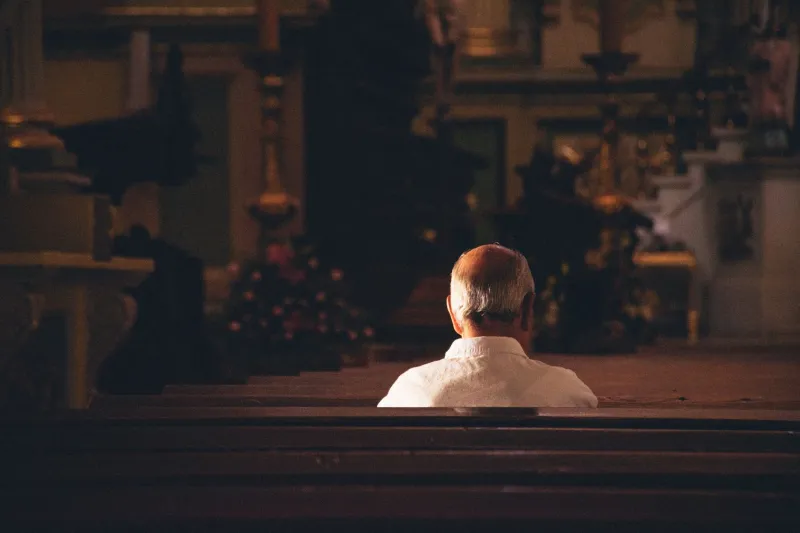
Patna's faith communities have stayed long enough to learn these lessons. Their parishes contain people who have worshipped alongside one another through funerals and failures, through seasons of institutional decline and seasons of unexpected renewal. They know each other in the way that only long proximity makes possible — and that knowledge, uncomfortable as it often is, has become the raw material of genuine love.
The Scandal That Is Not a Scandal
From the vantage point of American achievement culture, the decision to remain in a place like Patna — to invest one's professional gifts, one's relational energy, one's spiritual formation in a community that will never trend on social media or attract a book deal — looks, frankly, like a waste. This is the scandal that the title of this essay names.
But the scandal belongs entirely to the observer, not to those who have stayed. What looks like limitation from the outside is, from the inside, a form of freedom — freedom from the exhausting tyranny of perpetual self-reinvention, freedom from the anxiety of always needing to be somewhere more significant, freedom to love what is actually in front of you rather than what you imagine might be available elsewhere.
This is not a call for everyone to move to Bihar. It is a call for American believers to examine, with genuine seriousness, whether the restlessness they experience as spiritual leading might sometimes be something considerably less noble — a culturally conditioned flight from the very circumstances in which God is most actively at work.
Staying as Theological Statement
When a family remains in a deteriorating neighborhood and invests in its local parish rather than driving to a more vibrant congregation across town, they are making a theological statement. When a teacher spends thirty years at the same institution, pouring herself into students who will not remember her name, she is enacting a doctrine of vocation that no career-development seminar will ever articulate. When a community refuses to dissolve simply because its membership has declined and its building needs repair, it is bearing witness to a God who does not abandon what He has begun.
Patna's Christians have been making these statements for generations. They have done so without much recognition from the wider church and without the cultural scaffolding that makes such choices legible within American life. They have done so because their formation taught them that faithfulness to a specific place, over a long period of time, is not the consolation prize for those who lacked the ambition to go somewhere better.
It is, in fact, one of the most demanding and most holy things a believer can do.
An Invitation Worth Accepting
The communities gathered around institutions like Jesus and Mary in Patna extend, perhaps without fully intending to, an invitation to their brothers and sisters in the West. The invitation is not to imitate their specific circumstances. It is to interrogate the assumption that your circumstances are obstacles to your sanctification rather than the primary arena of it.
God, it turns out, is not waiting for you in the next city, the next congregation, or the next phase of your spiritual journey. He is present — persistently, specifically, and with great patience — in the particular and often unglamorous place where you already are.
The question Patna's faithful quietly pose to the rest of us is not why did you leave? It is something more searching than that: Did you stay long enough to find out what was actually being asked of you?