When Nothing Happens and That Is the Point: Recovering the Spiritual Weight of Ordinary Faithfulness

There is a particular kind of disappointment familiar to long-practicing American Christians—a quiet, low-grade suspicion that their faith is somehow failing. They attend services, pray without fanfare, serve in modest capacities, and raise children in households shaped by Scripture. Nothing extraordinary happens. No dramatic collapse precedes a tearful altar call. No viral moment crystallizes years of belief into a shareable thirty-second testimony. And because nothing extraordinary happens, they begin to wonder, in the small hours, whether anything is happening at all.
This is not a crisis of doctrine. It is a crisis of expectation—one manufactured, in large part, by a Western Christian culture that has come to treat the spectacular as the standard unit of authentic faith.
The Theater of Transformation
American Christianity has a complicated relationship with the ordinary. Its most visible institutions—megachurches, conference circuits, bestselling memoir publishers—have built entire economies around the dramatic arc of spiritual experience. The preferred narrative runs as follows: profound brokenness, a moment of shattering clarity, and then a life made unrecognizable by grace. This story is compelling precisely because it borrows the structure of great fiction. It has a before and an after. It has stakes.
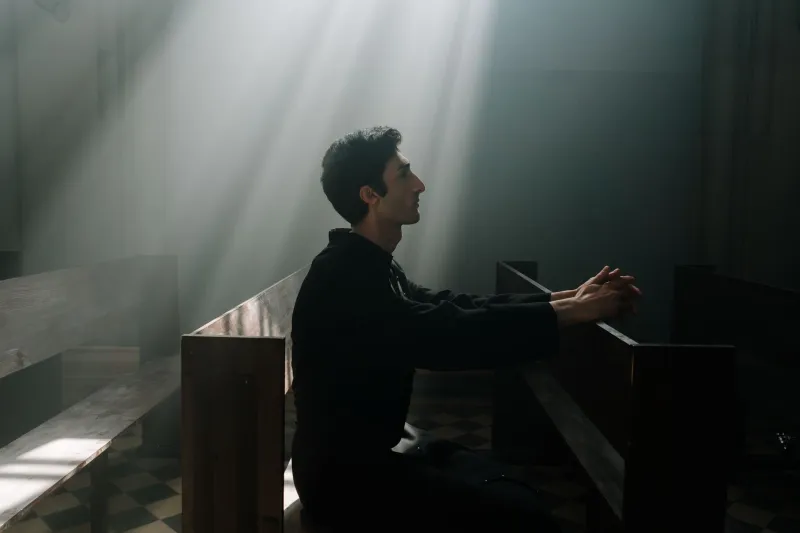
But most faithful lives do not conform to this shape. Most faithful lives look, from the outside, like very little. A woman rises early to pray before her household wakes. A man declines a profitable arrangement because it conflicts with a commitment made years ago to a principle no one else remembers he holds. Parents read the same passages aloud at dinner, year after year, to children who roll their eyes and eventually, decades later, find themselves doing the same. These acts generate no content. They are not easily packaged. And in a spiritual culture that has learned to equate significance with visibility, they have become quietly embarrassing—the evidence, some fear, of a faith that never quite caught fire.
What Patna Keeps That We Have Largely Discarded
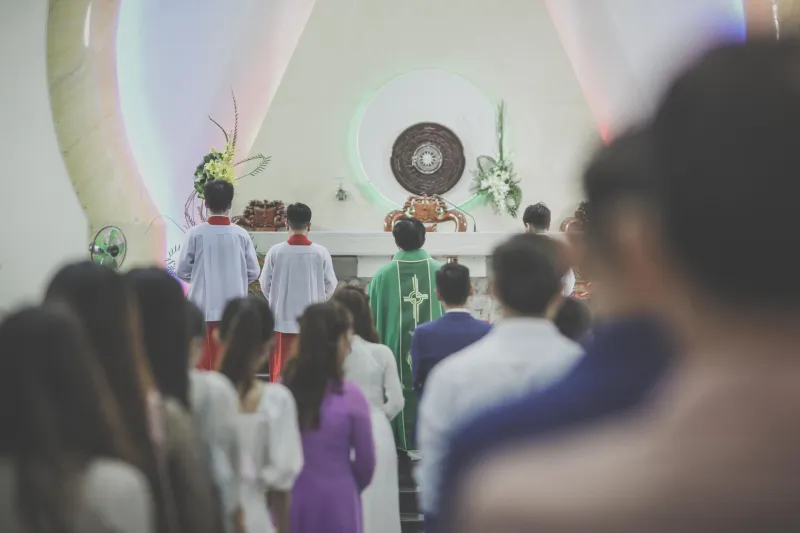
At Jesus and Mary Patna, we observe something different. The Christian communities of Patna, Bihar—some of them tracing their institutional roots back through generations of sustained, unglamorous witness—operate according to a logic of faithfulness that does not depend on periodic reinvention. These are communities in which the same prayers have been offered in the same postures across lifetimes. In which service to the poor is not a program launched with a branding strategy but a practice handed down like a trade.
This is not to romanticize scarcity or to suggest that Patna's faith communities are without struggle. They face material constraints, social pressures, and the same generational tensions that test congregations everywhere. But they possess something increasingly rare in Western Christian practice: a working theology of the unremarkable. A genuine conviction that God is present in repetition, in endurance, in the slow and unwitnessed accumulation of kept promises.
The Catholic and Protestant traditions that have shaped Patna's Christian heritage both contain rich resources for this understanding. The Benedictine concept of stabilitas—remaining in one place, one community, one practice long enough to be genuinely formed by it—has deep roots in the kind of faith that Bihar's Christian institutions have, of necessity, embodied. When dramatic reinvention is not available as a spiritual strategy, one learns to find God in what remains.
The Allergic Reaction
Why has American Christianity become so resistant to this vision? Several forces converge.
First, consumer culture has trained believers to expect regular novelty as a sign of value. A faith that does not regularly produce new experiences, new programs, or new emotional peaks begins to feel like a subscription that has lapsed. The megachurch model, for all its genuine pastoral accomplishments, has accelerated this expectation by competing for attention in an entertainment market. When church must compete with everything else vying for Sunday morning, it tends to optimize for the same qualities everything else optimizes for: stimulation, emotional engagement, and the feeling of having received something worth the time.
Second, the dominance of conversion narrative in American evangelical culture has created an implicit hierarchy of spiritual experience. The person with the dramatic testimony occupies a position of authority that the lifelong, quietly faithful believer does not. This hierarchy is rarely stated openly, but it shapes which stories get told from platforms, which lives get held up as models, and which believers quietly conclude that their own undramatic faithfulness must indicate some deficiency of spirit.
Third, and perhaps most insidiously, American individualism has made the communal, intergenerational transmission of faith nearly invisible as a category of spiritual achievement. A faith passed down through family and community over decades does not read, within an individualist framework, as an accomplishment. It reads as inheritance—passive, perhaps even unearned. What gets celebrated is the self-made spiritual journey, the faith discovered rather than received.
The Cost of Spectacular Christianity
The consequences of this orientation are not trivial. When ordinary obedience is treated as spiritually insufficient, believers who are living ordinary obedient lives face a chronic low-grade shame that gradually erodes commitment. They suspect they are doing faith wrong. They chase experiences that briefly relieve this suspicion before the cycle resumes. They leave communities in search of congregations that feel more alive—often finding that the new community eventually feels just as flat, because the problem was never the community.
More broadly, a Christianity allergic to the mundane loses its capacity to form people in the deep, durable ways that only sustained practice produces. Virtue is not installed in a weekend retreat. Patience is not acquired through an inspiring sermon series. The qualities that make a human being genuinely good—genuinely trustworthy, genuinely generous, genuinely present to others—are formed through years of small decisions made in the absence of applause.
Patna's faith communities understand this in ways that are difficult to articulate but easy to observe. The teachers at institutions like Jesus and Mary who have served for decades without recognition, the parishioners who have prayed the same liturgy through personal grief and communal upheaval alike, the families who have transmitted faith not as a peak experience but as a daily practice—these are not people who failed to achieve something greater. They are people who achieved something most of us have been taught not to recognize.
Relearning to Value What Lasts
For American Christians navigating a culture that has made ordinariness feel like failure, several postures may prove restorative.
The first is a deliberate recovery of long-form spiritual practices—prayer rhythms, liturgical calendars, service commitments—that are designed not to produce emotional peaks but to shape character through repetition. The point is not the feeling generated but the person formed.
The second is a reorientation toward communal memory. Patna's multi-generational faith communities carry a living archive of faithful lives that were never famous. Learning to honor these lives—to tell their stories, to understand oneself as continuing a lineage rather than beginning from scratch—restores dignity to the unglamorous and locates individual practice within something larger than the individual.
The third, and perhaps the most countercultural, is a willingness to let faith be boring. Not empty. Not dead. But boring in the way that a long marriage is boring—in the way that a well-tended garden is boring—in the way that any living thing that requires daily attention and produces no immediate spectacle is boring. The boredom, in these cases, is not a symptom of failure. It is the texture of something real.
The scandal of ordinary obedience is not that it is too small for God. It is that it has become too small for us. Recovering it may be among the most urgent spiritual tasks facing American Christianity today.